Europe’s (Surprising) Answers to the Rare-Earth Squeeze
Europe’s top 5 startups in critical materials, what Metinvest looks for in startups, and how Europe is closing the applied-AI funding gap with the US

Europe’s industrial future depends not only on developing new technologies, but also on securing the materials that make them possible. From rare-earth magnets in electric motors to high-performance composites in aerospace and defence, critical-material supply chains have become a strategic vulnerability. Our Top 5 European startups in advanced materials are tackling that challenge from different angles: recycling rare-earth magnets, recovering valuable materials from industrial waste and using AI to develop alternatives to scarce raw materials.
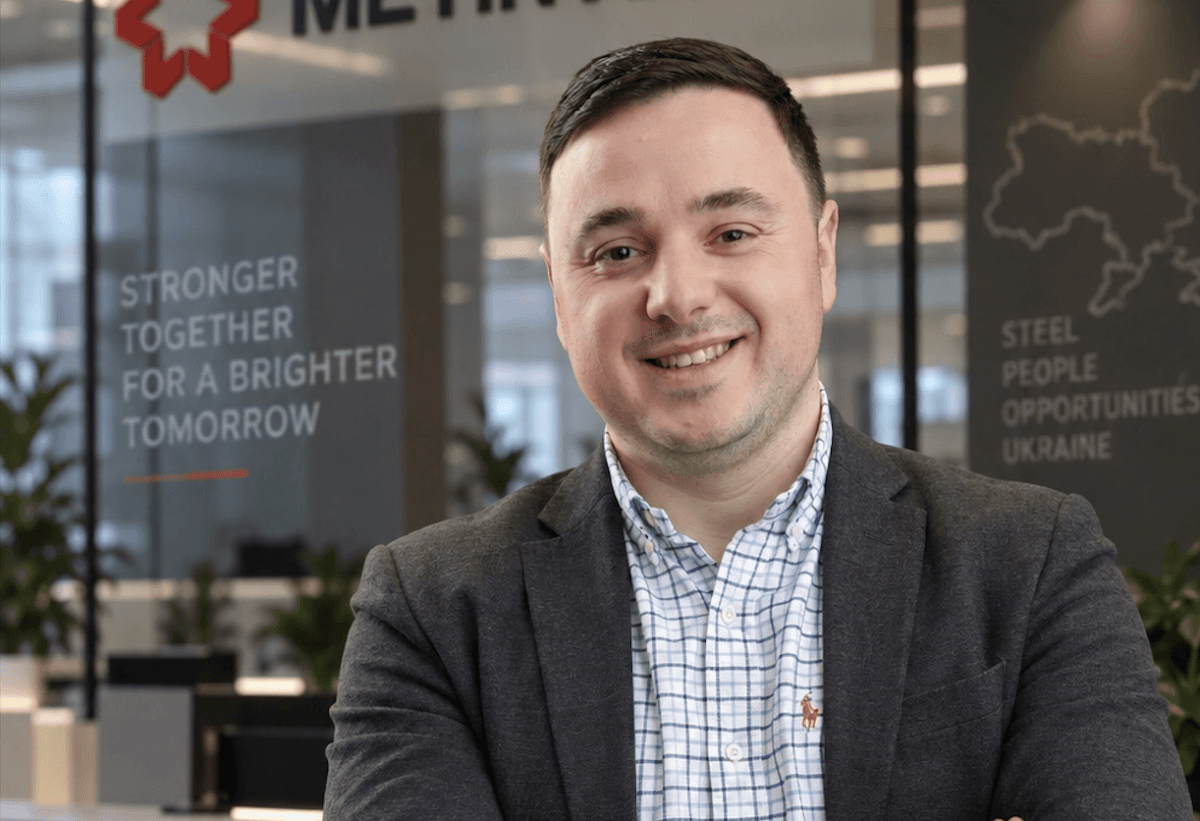
But developing the technology is only half the battle. Getting industrial customers to adopt it is another. We spoke with Maksym Balanyuk, Director of Innovation & Growth at Metinvest Digital, about what makes a startup stand out to a major industrial group, why understanding the customer's operational challenges matters more than a generic technology pitch, and what it takes to turn a successful pilot into a long-term partnership.
Also in this issue:
In The Leap Martin Schilling argues that deftech founders and investors should focus on technologies whose business models reward deterrence and readiness, rather than continued conflict and weapons consumption.
A new McKinsey and Boardwave report reveals why Europe's biggest AI opportunity may lie not in foundation models, but in industry-specific applications – and how European startups are closing the funding gap with their US counterparts.
Let’s go!
Why I back defence tech, and what still keeps me up at night.
It was a cold Saturday morning in February 1906, and Portsmouth had never seen anything like it. On the slipway stood a grey steel hull that had not existed four months earlier.
Ten heavy guns, where every other battleship carried four. The first battleship driven by steam turbines, and the fastest afloat. She could outgun and outrun anything at sea.
The King swung the bottle. The hull slid into the harbour.
The name of the ship was HMS Dreadnought.
The moment she touched the water, almost every warship on the planet was obsolete.
That included Britain's own. Its fleet of dozens of older battleships suddenly counted for little, and the race began again from a single ship. So Germany built. And Britain answered. Each side built for defence, and read the other's as a threat.
And someone got paid for every ship: Friedrich Krupp AG, Europe's largest arms maker, armed the German fleet, Vickers, Sons & Maxim armed the British.
In 1914 a shot in Sarajevo became a world war, and some 17 million people died.
Nobody wanted that war. But everybody built it.
A generation later, Britain drew the obvious conclusion: never again. And it was exactly the wrong one.
In February 1933, the Oxford Union, packed with Britain's future leaders, voted 275 to 153: "This House will under no circumstances fight for its King and Country."
Ten days earlier, Hitler had become Chancellor. At every step that followed, he bet the democracies were too weak to answer, and he was unfortunately right. He rebuilt the German army, sent troops into the Rhineland, annexed Austria and took the Sudetenland, each time without a shot fired against him. Six years later came the war.
Two stories, two opposite lessons. In 1914, building weapons led to war. In 1939, refusing to build them invited one.
Recently, some of my most intelligent conversations about defence were with people who warned me: don't fire up the spiral you want to prevent. Interestingly, most of them were women. None said deterrence was wrong. But they asked the hard questions.
Their questions come down to two models, and both have history on their side.
The Spiral: "When weapons are a business, war is a market."
A defence company's revenue grows with the threat. An investor's return grows with the budget. And the industry's most valuable label, "combat-proven", is earned in combat.
The logic goes like this: Industry profits from fear, so it amplifies it. One side's budget looks like aggression to the other, which arms in response. Products need proof, so they flow to wherever wars are fought. And the more weapons exist, the cheaper a war is to start and prolong.
And then there is the other model.
Deterrence: "Defence capability lowers the chance of war."
Wars start when an aggressor believes it can win quickly and cheaply. Defence capability breaks that calculation: the higher the cost of attacking, the fewer attacks.
The spiral is real when both sides are afraid. Deterrence is needed when one side is hungry. Russia has shown it three times, in Georgia in 2008, in Crimea in 2014 and in Ukraine in 2022: like Hitler in the 1930s, it treats every unanswered step as an invitation to the next. So Europe must build enough strength to stop that. But it must do so without growing an industry that, like Krupp and Vickers before 1914, needs the race to continue.
So the question is not whether Europe needs to build defence capabilities. It is what kind of defence industry we build, and that question starts with the companies.
Deterrence tech vs. war tech
There are two types of defence companies, and one question separates them: does the business model need the weapon to be credible, or to be used?
Deterrence tech gets paid for readiness. War tech gets paid for consumption.
Deterrence tech is worth paying for in peace. ICEYE's satellites see through clouds and darkness. Tekever's drones watch borders and seas. Isar Aerospace gives Europe its own access to space. Hadean trains soldiers in simulation.
War tech's unit economics need wartime consumption: cheap one-way drones by the hundreds of thousands, AI whose edge is combat data.
Of Europe's 30 most prominent defence scaleups, I count about five as pure war tech. Most sit in deterrence or an honest middle.
Why I am in the deterrence camp
Before February 2022, working in defence was unthinkable for me. Today DTM has a strong defence angle, partly because I am in the deterrence camp. My grandfather fought in the Second World War, and decades later he still talked about the horrors he had lived through. I don't want my sons and their generation to fight in a European war, living through the same horrors.
Let's not be naive: every euro for defence would be better spent on hospitals, infrastructure and schools. But without security, all of this is nothing.
So, are we merchants of death? Only if we build companies that need the war. Three questions for builders and investors:
What is your company for? "So that no one attacks us" is deterrence.
What does peace do to your business? A deterrence company survives the ceasefire.
Who decides where your product goes? Set your limits before the best customer calls.
The best defence product is the one that never has to be used.
With wishes that my sons and their generation never need what we are building in defence tech these days,
Martin
Source: Metinvest
Maksym Balanyuk is Director of Innovation & Growth at Metinvest Digital, the IT arm of Ukraine’s Metinvest Group. He studied at the Banking Institute of the National Bank of Ukraine in Lviv and joined Metinvest Digital in 2020, where he initially led its R&D activities, focusing particularly on AI, computer vision and other emerging technologies for industrial applications. Since 2025, Balanyuk has served as Director of Innovation & Growth, overseeing the strategic adoption of new technologies and their translation into scalable business solutions across Metinvest’s mining and steel operations. He’s actively sourcing GenAI for operational efficiency, predictive maintenance, industrial IoT, computer vision, digital assistants for frontline employees, process automation, and technologies supporting sustainability and resource optimisation.
Which startup teams have impressed you most in the past year, and what set them apart?
The teams that stand out are usually not just strong technically. They demonstrate a deep understanding of industrial realities, collaborate closely with business stakeholders, and can quickly adapt their solutions to real operational constraints. The most impressive founders combine technical excellence with persistence and a strong customer focus. One example this year is Sybilion: What stood out was not only their technical expertise, but their approach to engaging with us. Rather than offering a generic solution, they took the time to understand our industry context, challenges, and priorities. Based on that analysis, they prepared a very specific proposal tailored to our needs and the realities of a large industrial group. For me, this customer-centric approach is one of the strongest indicators that a startup is ready to work with enterprise organizations.
How do you decide which startups are actually worth working with, given how much reaches your desk?
We evaluate startups through three primary lenses: business value, implementation feasibility, and team capability. We look for a clearly defined problem, measurable outcomes, realistic integration requirements, and a team that can execute reliably during a pilot and beyond. Startups that invest time in understanding a customer's specific needs and then build a concrete proposal around those needs are far more likely to gain attention and support. This is exactly the kind of approach we appreciate and will continue to encourage in our interactions with founders.
What typically helps a startup move from an initial pilot to a real, ongoing partnership with Metinvest?
The transition from a pilot to a long-term partnership is usually driven by demonstrated business impact. Successful startups establish clear KPIs from the beginning, work closely with business owners, and ensure that the pilot addresses a meaningful operational challenge. Adoption by users and scalability across business units are also critical factors. Sybilion is an example of the kind of engagement valued here too: while the collaboration has not yet progressed to a formal partnership (largely due to other priorities, including the war in Ukraine and business continuity work), it showed a clear understanding of the business problem, a strong value proposition, and a willingness to adapt to Metinvest's environment.

Here are five European startups strengthening critical-material resilience – developing new ways to recover, regenerate and replace strategically important materials so Europe can build more robust supply chains for energy, mobility, aerospace and defence.
Rarearth | Milan, Italy
Technology: Direct recycling of NdFeB permanent magnets from end-of-life motors, hard drives and electronics. Rarearth dismantles, purifies and reprocesses used magnets into recycled rare-earth alloys and new high-performance magnets for industrial use.
Customers & Partners: Works with WEEE suppliers, micromobility companies and industrial partners; in 2026, Rarearth also signed an agreement with Haiki+ to explore an Italian value chain for recovering neodymium from permanent magnets.
Use cases: Electric motors, automotive, wind power, robotics, sensors, electronics and other applications dependent on high-performance permanent magnets.
Funding: €2.6M financing round in 2025, led by Primo Capital and MITO Tech Ventures, followed by a €2.5M EIC Accelerator grant in 2026.
Why it matters: Europe consumes rare-earth magnets across its most strategic industries but remains exposed to concentrated overseas supply chains. Rarearth is trying to turn Europe’s existing stock of motors and electronics into a domestic source of magnet material.
→ Rarearth plans to start polymer-bonded magnet production in 2026, with sintered magnets targeted for 2028.
RARA Factory | Venice, Italy
Technology: Physics-driven AI combined with high-throughput material synthesis and advanced characterisation. The platform generates experimental data at scale to discover and validate materials that can replace rare earths and other critical raw materials.
Customers & Partners: RARA Factory has secured its first commercial contract and collaboration agreements with Italian and international companies, although customer names have not yet been publicly disclosed.
Use cases: New magnetic and functional materials for energy, mobility, aerospace and other industries exposed to scarce or geopolitically concentrated raw materials.
Funding: €3.2M Seed round in January 2026, backed by Primo Capital, CDP Venture Capital and business angels led by Alberto Baban.
Why it matters: Resilience does not always mean finding another supplier. RARA Factory is attacking the problem one layer deeper: redesigning materials so strategic industries need fewer scarce inputs in the first place.
→ By January 2026, the company had already synthesised and tested nearly 10,000 new materials.
Nanomox | London, UK
Technology: An ionic-liquid chemistry platform for producing precisely engineered metal-oxide nanoparticles while also recovering valuable metals from ores and industrial waste streams. Target materials include zinc, manganese, copper and rare-earth elements.
Customers & Partners: Working with beauty and skincare brands, formulation partners, contract manufacturers and R&D teams as it brings its first zinc-oxide material to market; individual commercial customers have not yet been publicly named.
Use cases: Advanced metal oxides for cosmetics, electronics and catalysis, alongside recovery of metals from batteries, mining tailings, steelmaking residues and other industrial waste.
Funding: £2.4M Seed financing in February 2026, combining equity and grants and led by TSP Ventures and Boast Trading, with participation from Imperial College Enterprise Fund 3, SNØCAP VC, Circular Innovation Fund and EIT RawMaterials.
Why it matters: Europe’s industrial waste streams already contain significant quantities of strategically useful metals. Nanomox is building a platform that can turn those overlooked residues into both recovered resources and higher-value advanced materials.
→ Its first commercial pilot, Catalyst 1, is designed to take production from laboratory quantities to tonnes per month.
Uplift360 | Luxembourg / Bristol, UK
Technology: Chemical regeneration technologies that recover high-value fibres such as carbon fibre and aramids from composite waste and return them to industrial supply chains as usable advanced-material feedstock.
Customers & Partners: Works with Babcock on defence-equipment materials recovery, Leonardo on regenerating materials from military platforms and Rolls-Royce on an additional industrial project.
Use cases: Aerospace structures, defence platforms, automotive and energy applications where carbon fibre and other high-performance composites are expensive, strategically important and difficult to recycle.
Funding: €7.4M Seed round in February 2026 led by Extantia, with participation from the NATO Innovation Fund, Promus Ventures and Fund F.
Why it matters: Carbon fibre and aramids underpin some of Europe’s most demanding aerospace and defence systems, yet valuable material is still incinerated, landfilled or exported at end of life. Uplift360 wants to turn that waste into sovereign industrial feedstock.
→ One project with Leonardo is exploring how material recovered from Merlin helicopter rotor blades can be reused in uncrewed systems.
MatNex | London, UK
Technology: AI and physics-based computational modelling for discovering new materials with targeted combinations of performance, cost and sustainability. Its magnet programmes focus on materials that can reduce or eliminate dependence on rare-earth elements.
Customers & Partners: Collaborates with the University of Sheffield through Project DREAM, an Innovate UK-backed programme developing rare-earth-free magnetic materials for electric motors, wind turbines and robotics.
Use cases: Permanent magnets, energy technologies and advanced industrial materials where existing formulations face supply, cost, performance or environmental constraints.
Funding: £2M Seed round in 2023 backed by investors including Ada Ventures, High-Tech Gründerfonds, MD One Ventures and the University of Cambridge Enterprise Fund.
Why it matters: Critical-material dependence is partly a chemistry problem. By searching much larger material-design spaces than conventional R&D can test manually, MatNex is trying to make substitution a practical industrial strategy rather than a decades-long research programme.
→ Project DREAM is explicitly working toward permanent magnets that can power EV motors, wind turbines and robotic actuators without relying on rare-earth elements.
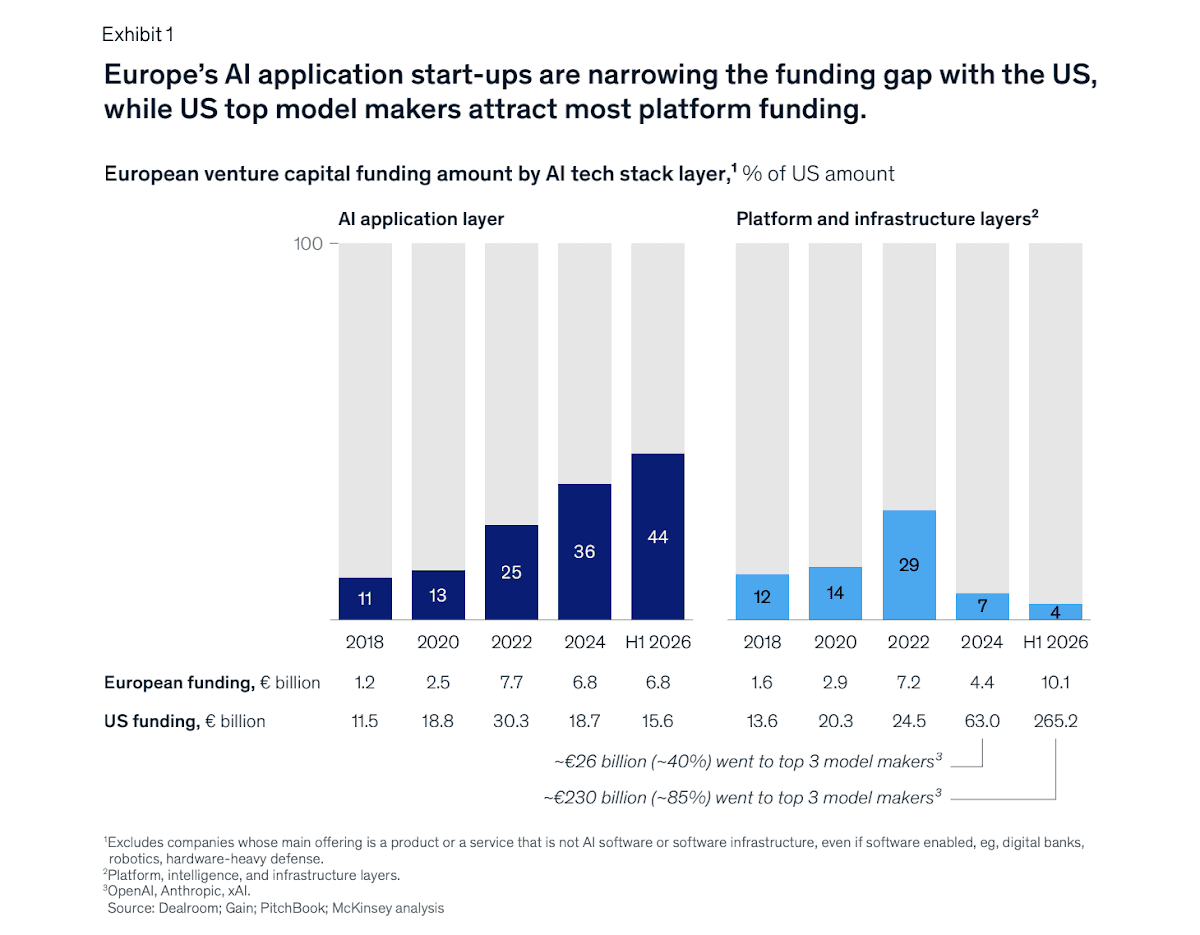
In 2018, European AI application funding stood at just 11 percent of US levels. Eight years later, that ratio has climbed to 44 percent, with absolute European application funding reaching €6.8 billion in the first half of 2026. Source: Europe’s new AI edge? The emerging application layer opportunity
Europe may be losing the foundation-model race. But when it comes to turning AI into actual business value, the gap with the US is closing fast.
A new report by McKinsey and Boardwave, published on 17 September, argues that Europe’s biggest AI opportunity lies in the application layer – particularly industry-specific solutions. Drawing on VC funding data from 2018 to mid-2026 and interviews with more than 30 founders, investors and technology leaders, the report identifies where European AI companies are gaining ground and what it takes to scale globally.
Here are five key takeaways:
1. Europe is catching up in applied AI. European AI application startups attracted funding equivalent to 44% of US levels in H1 2026, up from just 11% in 2018.
2. Vertical AI is closing the gap even faster. Funding for European industry-specific AI startups has reached 67% of US levels, compared with just 9% in 2018.
3. Europe’s industrial complexity could become its competitive edge. Highly regulated markets, fragmented systems and complex workflows create opportunities for AI solutions that require deep industry expertise.
4. Go deep, then go global. Successful founders embed AI into critical enterprise workflows, build on Europe’s industrial strengths and target international markets from day one.
5. The ecosystem is getting stronger. Improving AI talent flows, more proactive university commercialisation, corporate co-investment and growing pools of patient sovereign capital are creating better conditions for European AI champions.
Hack the Future: Construction Robotics Hackathon | 27–30 November | Aachen
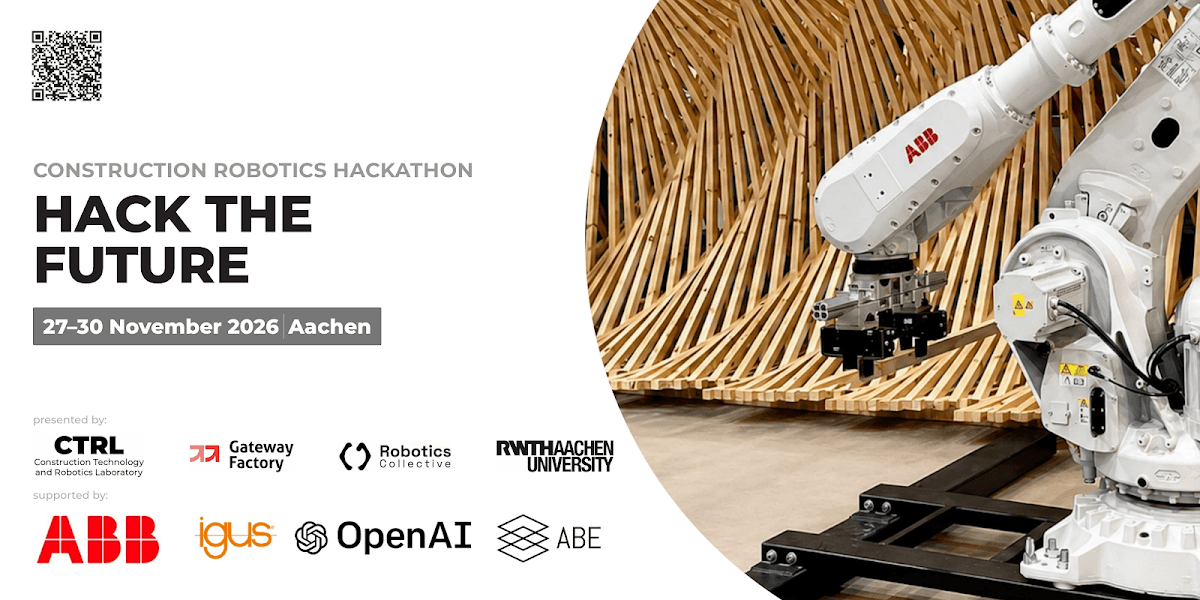
Robots are leaving the factory floor and heading to the construction site – and we’re looking for the students and builders who want to be part of that shift first.
From November 27–30, CTRL (RWTH Aachen), Gateway Factory and Robotics Collective Aachen are hosting the Construction Robotics Hackathon in Aachen: four days to prototype real robotics solutions for real construction challenges, working with actual hardware from ABB, igus and Siemens, plus AI infrastructure and token credits from OpenAI.
Expect a kickoff with challenge briefings and team formation, a full build sprint with mentor office hours and technology clinics, and a demo day in front of an industry jury – with prize money on the table. Challenges span assembly and installation, surface finishing, construction logistics, and perception and safety, all set by construction companies bringing their own real-world problems to solve.
Who should go: This is built for Engineering and CS students, makers, and anyone curious about applied AI and hardware – no construction background required, just curiosity and the will to build. Teams form on-site, so come solo or bring your crew.
Spots are limited – apply here.
And here are more upcoming Tech Events worth the trip: We scanned the calendar for the most interesting tech gatherings coming up in Europe – here are three worth having on your radar.
Europe Tech Connect 2026 | 5 October, Munich and 6 October, Berlin
Organised by the Singapore Economic Development Board (EDB), Europe Tech Connect brings a delegation of senior Singapore demand players to Germany to meet European deep-tech companies ready for commercial partnerships. Participating organisations include Changi Airport Group, the Civil Aviation Authority of Singapore, Land Transport Authority, Maritime and Port Authority of Singapore, Ministry of Transport, ST Engineering Ventures and TechX Ventures.
The focus areas span agentic AI, robotics and Physical AI, industrial AI, digital twins, energy and electrification, quantum technologies, nuclear operations and climate tech. The format starts with reverse pitches from the Singapore organisations, followed by curated 1:1 meetings with selected companies.
→ For startups with a tested MVP and commercial readiness, it is a concrete opportunity to explore customer projects, technical partnerships, market entry into Singapore and potential investment.
Register interest by 25 September 2026: Munich, 5 October | Berlin, 6 October
European Microwave Week 2026 | 4–9 October | London, UK
Europe’s flagship gathering for RF, microwave, millimetre-wave, radar and semiconductor technologies combines three major technical conferences with the continent’s largest RF and microwave exhibition. This year adds dedicated Defence, Space, Automotive and 6G Forums, linking core component technologies directly to strategic end markets.
Why go: A particularly strong event for understanding the enabling hardware beneath Europe’s defence, space and communications ambitions – from radar and electronic warfare to satellite connectivity and next-generation wireless systems.
International Astronautical Congress 2026 | 5–9 October | Antalya, Türkiye
The 77th International Astronautical Congress brings more than 6,000 participants from across the global space sector together for five days spanning launch, satellites, exploration, science, infrastructure and space policy. It remains one of the few gatherings where agencies, established aerospace groups, emerging space companies, researchers and governments operate in the same ecosystem.
Why go: Space is rapidly becoming both commercial infrastructure and a strategic sovereignty layer. IAC offers one of the broadest views of where new capabilities, government programmes and private capital are converging.
CPHI Milan | 6–8 October | Milan, Italy
One of the world’s major gatherings for the pharmaceutical value chain returns to Milan, connecting companies across biotechnology, pharmaceutical manufacturing, ingredients, machinery, supply chains and contract production. The event is particularly relevant as biopharma moves toward more automated, data-driven and flexible production infrastructure.
Why go: For deep tech, the interesting story is upstream of the drug itself: bioprocessing, manufacturing equipment, automation and new production platforms are becoming strategic infrastructure as Europe looks to retain more pharmaceutical capability onshore.

